Introduction
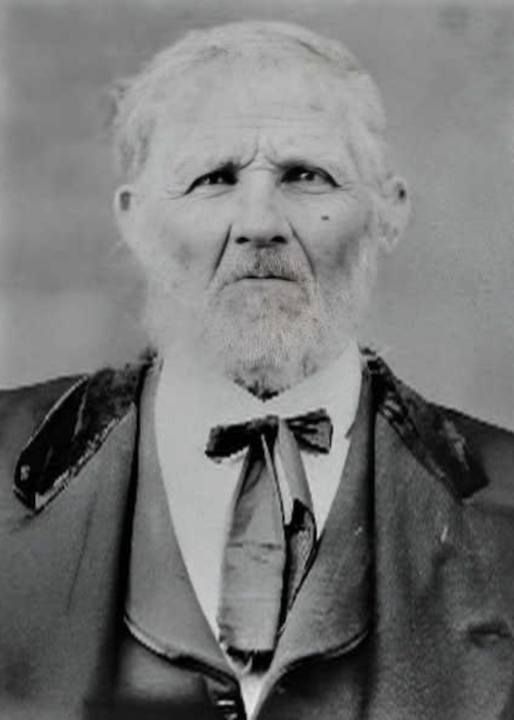
Hanson Stevens and his family history represent a powerful illustration of determination, resilience, and pioneering spirit that shaped early American history. From their roots in the Ohio River Valley to their journey on the Oregon Trail, the Stevens family’s pioneer experiences mirror the challenges and opportunities many settlers faced in the 1800s.
Descendants of the Stevens family are proud of their rich, pioneer heritage. Our ancestors are remembered and celebrated at our annual reunion for the hardships and achievements they experienced as they traveled the Oregon Trail, cleared and farmed the land, built homes for large families, raised their families under unimaginable conditions, buried their loved ones young and old, and contributed to the growth of new communities.
Primary sources for the content below are The Stevens tree : a history of Obediah Stevens and descendants by Clark, Joe M and Stevens Family History: Hanson and Lavina Stevens written by descendants of the Hanson and Lavina Stevens Family and published in 2006. An electronic copy is not currently available for this publication, but a hardbound copy can be found at the Genealogical Forum of Oregon and the Oregon Historical Society. These two publications contain extensive research with detailed resources, which are not included here. That detailed information is left for researchers to discover. Ancestry.com and FamilySearch.org were also used for research.
A link to the genealogy of Hanson, Lavina, and their children followed by Hanson’s second wife Elizabeth and their children is below the content. Later updates will expand on the children’s history and genealogy.
Hanson Steven’s family
Hanson was born on March 6, 1815, to his father Obediah Stevens and a woman family members believe was named Mary (last name unknown)1 in Ripley County, Indiana near the Dearborn County line. After the War of 1812, Obediah built a farmhouse and mill on the banks of Hogan Creek, which is where Hanson, his older brother Sylvester (1812), and three sisters were born: Lucinda (1816), Lucretia (1818), and Priscilla (1820). Tragically, Mary passed away shortly after Priscilla was born leaving Obediah with five young children to raise. Shortly after Mary’s death, Obediah married Mary Carbaugh in late 1820. They produced seven additional children: Elizabeth “Eliza” (1822), Christena (1824), Fidelia (1826), Obediah (1829), Sarah (1831), Charles (1834), and Samuel (1837). Between the1820s and 1830s records show Obediah purchasing several acres of land in Ripley County (some possibly War of 1812 land grants). Sylvester and Hanson also purchased land as children of a service man of the War of 1812.
“Closely connected to river commerce, Hanson learned the trade of barrel making: he was known as a ‘cooper.’ Wooden barrels were in high demand on the frontier to transport such cash crops as hard cider. The two apple orchards on the Old Obed Farm no doubt supplied ample material for cider, so the family had their hands in all stages of production: apple growing, barrel-making, pressing cider, and shipping the cider to market.” (Excerpt from Stevens Family History: Hanson and Lavina Stevens, 2005, Chapter 1, pg. 4.)
Lavina Wickard’s family
Lavina‘s parents, Joseph and Elizabeth (Watson) Wickard, moved their family from Butler County, Hanover Township, Ohio to Ripley County, Indiana around 1820. Joseph and Elizabeth had 10 children: Isaac (1817), Lavina (18192), John (1821), Joycy (1823), Sarah (1826), Elsie (also spelled Elcy, 1828), Joseph (1830), Joel (1832), Jacob (1834) and Catharine (1836). U.S. deed grants records show Joseph purchasing 80 acres of land in Decatur County, Indiana (abuts Ripley County in the northwest) in 1822 and another 80 acres in Ripley County, Indiana in 1838. He was also heir to his father, Bartholomew’s estate in 1825. Joseph served as a private in Captain Joel Collins’ Company of Ohio Volunteers from August 1812 through February 18133. When purchasing land, Joseph and his children benefited from their status as a War of 1812 veteran and children of a U.S. military veteran.
Carter Hilsabeck’s4 research on the Wickards is a valuable resource on the Wickard family history and genealogy. A letter from Mr. Hilsabeck to the Ripley County Historical Society was found when researching the Wickards. In the letter he is inquiring about his line of the Wickard family. The following is an excerpt from the letter that sheds some light on his research on Joseph and Elizabeth’s family:
“Joseph Wickard, son of Bartholomew and Rosanna Wickard, married Elizabeth Watson on January 4, 1816 in Butler County, Ohio. They came to Ripley County, Indiana in the 1820s. The two died in 1840 in January [sic]5 or June and February, either one month or five months apart. Eight children were left as orphans and taken in by their uncles. One was Isaac Watson, who had bought land from Joseph about 1835 near Elrod. One of the eight children was Lavina, who married Hanson Stevens. I don’t believe Isaac Watson lived very long in Ripley County, as he shows up in the census in Butler County, Ohio in the following years. It appears that the two families may have gone back and forth between the two counties.
The orphaned children of Joseph Wickard took Veterans Land Grants from their father’s service in the War of 1812. I have a copy that is very explicit in naming the minor children and several of Joseph’s brothers and sisters who cared for the children. However, nothing was mentioned of Isaac Watson. I found one of Joseph’s children, Elsie Marie, in the 1850 census in the home of Isaac Watson, St. Clair Township, Butler County, Indiana. The land grant record stated that Joseph Wickard died in Dearborn County, Indiana. I am wondering if his farm was partly in Ripley and Dearborn Counties, Indiana, or maybe he was taken to his brother’s home where he died. The cause of the two deaths was not preserved in our family records. Joseph was 49 years of age and his wife Elizabeth about 40. We suspect Cholera or TB.
I am trying to find out where the graves of Joseph and Elizabeth Wickard6 are from 1840. Also, I am hoping to find the parents of Elizabeth. Isaac Watson was her brother and likely so were a James and Henry Watson.”
Hanson marries Lavina Wickard
We don’t know the story of how Hanson and Lavina met, but both certainly grew up in Ripley County, Indiana. Lavina’s parents Joseph and Elizabeth (Watson) Wickard moved the family from Butler County, Ohio, to Ripley County, Indiana, around 1820. Lavina was born 1821. Hanson would have been six at the time. Hanson and Lavina married March 1838, and by the end of that year, their first child, Elizabeth, was born, December 12, 1838. Second child, Isaac, was born in March of 1840. Sadly, six months later, Elizabeth passed away in October of 1840. The year 1840 proved to be a year of loss for the family along with the joy of Isaac’s birth. In the months surrounding Isaac’s birth and death of Elizabeth, tragedy struck Lavina’s family. Her mother passed away at age 40 in February, and her father passed at age 49 in June. No records state the cause, but the belief is that they died of either TB or Cholera. The underage children were cared for by relatives. Records show that Joseph’s brother, John Wickard, was made guardian of four minor children: Elcy, Joel, Jacob and Catharine. Taking advantage of Joseph’s War of 1812 veteran status, John applied for and received land grants for Joel, Jacob and Catharine.
Three additional children were born while Hanson and Lavina were living in Ripley County: Rebecca (1841), Rispa (1843), and Christina (1844).
Tragedy lands Obediah in Keokuk, Iowa
Obediah, being of pioneer and entrepreneurial spirit, wanted to expand his mercantile business to include river commerce. His plan was to travel down the Ohio River, and up the Mississippi River, to begin a new business. In approximately 1840 or 1841, Obediah, his wife Mary and children, Christena, Fidelia, Sarah, Charles and Samuel left for the Mississippi River by boat. Sylvester and Hanson stayed behind in Ripley County to manage the family business. Also remaining in Ripley County were Lucrecia, Lucinda, Priscilla, and Eliza who were married, and establishing families by 1841, and Obediah Jr. (age 12) remained in Ripley County with Lucinda.
As fate would have it, the boat Obediah and his family were traveling encountered problems on the Mississippi River and sank taking all their possessions with it. Thankfully, Obediah’s wallet containing several hundred dollars survived the disaster. They continued by land and boat along the Mississippi until they reached Keokuk, Iowa, and put down roots. Situated at the junction of the Des Moines and Mississippi Rivers, it was prime location to grow a business. Settlement and commerce were beginning to grow in the area. Within two years Obediah had built three stone buildings downtown naming them the Stevens Buildings. He also had two barges operating by family members. By 1850, all family members except for Sylvester were living in Keokuk and assisting with the booming family business. The U.S. 1850 Census shows Hanson’s family living in Keokuk. Records show that Hanson and Lavina’s next three children were born in Keokuk: Sarah (1847), Millard (1849) and Mary (1851).
Obediah’s final business venture: Indianola, Texas
Early in the 1840s, Obediah was drawn to Indianola, Texas most likely due to the prospects it gave him to establish another business. The Republic of Texas was experiencing a land boom drawing hundreds of people to the area for prospects. This would have been a hard opportunity for Obediah to pass up. He, Mary, and the same children who traveled to Keokuk, moved to Indianola, and Obediah began establishing his business there. He purchased a 160-acre tract (deed date 1845) and a home on Main Street, facing the water at Indian Point (Lot 1, block 9). This area was bustling due to a rush of German immigrants who were arriving by boat and establishing tent cities. Supplies and services were needed to support this influx. Obediah successfully established his business, and in 1850, Christena and Fidelia were married. Obediah succumbed to the Dengue fever in the fall of 1852 leaving no will. His property was liquidated and wife Mary lived with different children until her death in 1881.
Oregon bound: Hanson and Lavina on the Oregon Trail
The death of his father, liquidation of his property, and the draw of the promise of fertile farmland through donation land claims most likely prompted Hanson to leave for Oregon. In April of 1852, Hanson, Lavina, and their seven children left their home and family in Keokuk, Iowa to travel on the Oregon Trail. Hanson and Lavina traveled to Oregon with the Dickson/Dixon wagon train (we are not sure of the spelling; our family’s historical accounts have it spelled both ways). This was the most dangerous migration year ever recorded. The trail was clogged with wagons heading to the gold mines in California, Cholera was rampant, forage and water for the oxen was scarce.
Hanson utilized his cooper skills to fix wagons and wagon wheels during the trip. When the train stopped at Ft. Bridger in Wyoming to resupply, many members of the Dickson train continued on via the California Trail to explore the booming gold rush. Hanson and Lavina were devoted Methodists and did not want to raise a family in that rough environment, so carried on to Oregon. Isaac was 13 at the time and remembers that the Dickson train had 50 ox drawn wagons and that many or most decided to split at the junction to California. Second child Rebecca was 11 and remembers that the train was unwieldy and Hanson stood on one side of the street and Dickson on the other and Hanson invited those who wanted to continue to Oregon to come over to his side and they ended up with 23 wagons. We will never know the exact story because no diaries were written and memories fade with time. We do know for certain that at Ft. Bridger, the Stevens family chose to farm and raise their family in Oregon, and headed out for the “Promised Land,” as described by their friends who already made the trip.
We cannot say with certainty that Hanson left for Oregon alone as some of the descendants of the Hanson Stevens family believed, or if the story Rebecca recounts is closer to the truth. With both Isaac and Rebecca recalling that some members of the Dickson train wagon were part of the Oregon trip, it likely that Hanson did not travel alone to Oregon. Rebecca remembers connecting with a train at the Snake River, Three Island Crossing in Idaho. The End of the Oregon Trail, Historic Oregon City website states that 50,000 people headed to Oregon in 1852 which most likely provided opportunities to travel with other wagons.
“Before they parted ways, Hanson bought the cattle of many of the other families of the Dickson train, intending to bring them with him to Oregon. He had been told that cattle could winter over on the native grass in the Willamette Valley without requiring extra feed. Sad to say that winter was an extraordinarily severe one, with deep snow. Some said it was two feet deep and lay on the ground for quite awhile. Most of the already weakened cattle died during the winter after they arrived in Oregon, ending Hanson’s plan of being a cattle baron.” Excerpt from Stevens Family History: Hanson and Lavina Stevens, Chapter 1, pg. 16 (2006)
“The immigration of 1852 was retarded all along the way . . The very multitude of people served to make hast [sic] very difficult. Disease and death, too, halted wagon trains for a total of many days, so that by the middle of October fully one half of the immigrants were still east of The Dalles and many of them were wholly or nearly destitute of provisions. The late rains added to their difficulties and their sufferings. . . .relief parties were organized, but the provisions dispatched were inadequate and further help was appealed for. .. .the family arrived in Oregon in October, 1852, and Mr. Stevens secured a donation land claim of 320 acres in sections 17 and 18, in township 6 south and 1 west on which he began the cultivation of the soil as required by the Donation Act, June 15, 1853. . . .” The History of Silverton Country, Robert Horace Down
By the time the Stevens family arrived in Oregon in October, they had $5 left of their savings. This would not go far as a bushel of wheat was $5 and $3 for potatoes. Rebecca Mount recalled that her father found work splitting rails to earn money for the family. This story is also recounted in the Reunion: Stevens Family: 1891, vol. 1 (1946) minutes book. It adds that Hanson built a cabin, then started splitting rails. The Stevens family settled on a 360-acre Donation Land Claim (DLC)7 on the west bank of the Pudding River six miles northwest of Silverton and six miles west of Mt. Angel. Hanson and Lavina had two additional children after arriving in Oregon, Emma (1854) and Martha “Mattie” (1859).
Lavina dies of cancer
Sadly, Lavina passed away from breast cancer in November of 1859, three months after giving birth to Mattie. Hanson and nine children, ages 19 to 3 months, were left to carry on without her.
An account by Loris Stevens, Isaac Stevens’ grandson, stated that after Oregon statehood (granted February 1859 and most likely after the loss of Lavina), Hanson travelled about and didn’t settle down to farming as his real occupation, but was a good provider. As Isaac grew older and became more experienced farming, he took on more responsibilities on the DLC with his father’s blessing.
Hanson marries Elizabeth Bentley
Hanson married Elizabeth Bentley in Yamhill County April 7, 1862. Elizabeth had 8 minor children from a prior marriage to Esquire Alvin “Alvin” Fuller8: Mary Arabella (1850), Clara A. (1851), Joel W. (1851), Emma (1852), Edward Bentley (1852), Charles H. (1855) and Mary Jane (1857). Hanson and Elizabeth added three more children between 1863 and 1866: Keithley Bales (1863), Lyman Davis9 (1865) and Alice Fidelia (1866). Alvin and Elizabeth were also Oregon Trail travelers, leaving from Pike, Illinois in 1853 with five children. Alvin applied for a donation land claim in Yamhill County, Oregon which he farmed until his death in 1858. 10 Elizabeth married Hanson four years later. It’s unclear if all of Elizabeth’s children came to live with Hanson and Elizabeth. All would have been underage, so it is likely. There are no family accounts of Elizabeth’s children living with Hanson and Lavina’s children. Family accounts say that the relationship between Hanson and Lavina’s children, who were still at living at home, and Elizabeth were strained and the girls eventually left to live with other older siblings. Isaac stayed to manage the farm. In 1874, Hanson signed a DLC patent transferring the Oregon DLC to Isaac, and eventually Isaac bought out the other heirs after Hanson’s death.
Hanson and Elizabeth eventually moved to Thurston County, Washington with Elizabeth’s children and their three children. They possibly moved there in around 1866 after Alice was born. Isaac began renting the DLC property around the same time as the move to Washington.11 We do not have record of what happened with Alvin’s DLC, but the U.S. 1860 Census has Elizabeth living there two years after his death. Elizabeth and Alvin’s first child, Arabella was married in Yamhill County, Oregon in 1868, which may mean they were still in Oregon during that time. Washington state’s 1877 (Committee, 2006-1881) territorial census records show Hanson and Elizabeth living in Thurston County. Hanson, Elizabeth and their three children are shown in the U.S. 1880 Federal Census living in Thurston Co. next door to Elizabeth’s parents, William (age 83) and Jane (McDowell) (age 78) Bentley and the married, youngest daughter of Alvin and Elizabeth, Mary Jane (Bentley) Prince. All of the men’s occupations are listed as farmers.
Hanson death
In 1874 Hanson signed a DLC patent transferring the Oregon DLC to Isaac, and eventually Isaac bought out the other heirs. Hanson passed away in 1883 in Bethany, Oregon.12 Based on that information, it appears he returned to Oregon sometime between 1881 and the time of his death, but it is not known exactly when, and if he was living with Elizabeth. Elizabeth’s residence sources in Ancestry.com show her living in Portland, Oregon, in 1885. Hanson was buried with Lavina in the Bethany Pioneer Cemetery, Bethany, Oregon.
Elizabeth remarriage and death
Three years after Hanson’s death, Elizabeth married William Mize who lived in a neighboring property near where Hanson and Elizabeth had lived in Thurston County. After three years of marriage, Elizabeth passed away at the age of 66 in 1889 in Bucada, Thurston County, Washington, and is buried in Forest Grove Cemetery, Tenino, Washington. William Mize died in 1891 at the age of 81 and is also buried in Forest Grove Cemetery.
An interesting Elizabeth connection was discovered in the 1948 Stevens family reunion minutes. 13 Willard Stevens, descendent of Isaac, shared a letter that was signed by William and Elizabeth “E.J.” Mize. Willard had reached out to them for information on Hanson’s siblings. William and Elizabeth wrote in a letter dated 1886 that they were happy to receive communication from Willard, they provided information on some of the siblings, and signed the letter, “We send our love to all.” It appears that relationships were much improved from the early days after Elizabeth’s arrival to the family. In that same reunion, Hanson and Elizabeth’s youngest daughter Alice (Stevens) Dixon and her daughter, Alice Dixon Minor, attended. They were warmly welcomed by all. Elder Alice, age 82, was selected as “Queen Mother of the Clan” by unanimous vote.
Stevens Family Tree: 1st generation descendants
Footnotes
- Dorothy Clevenger, Isaac Stevens descendant, wrote in Stevens Family History: Hanson and Lavina Stevens, Chapter 1, pg. 1, that “some sources identify her as Mary.” We are not sure what those sources are. Possibly from family testimonies. Obediah’s second wife was named Mary. Dorothy states that there was confusion about Obediah’s first wife’s name. On page 2, she said, “small children might have been confused in their early memories between their two mothers named Mary.” We have an assumption that as the kids grew older, there was some debate about the first wife’s name. ↩︎
- Various census and family history data found in Ancestry.com have the birthplace for Lavina either in Butler County, Ohio or Ripley County, Indiana. Dorothy Clevenger writes that the family moved to Ripley County in the early 1820’s, which places Lavina’s birth in Ohio. An Oregon, Biographical and Other Index Card File, 1700s-1900s index card found in Ancestry.com recorded Lavina’s death and states she was born in Ohio. ↩︎
- Letter from the Treasury Department, Third Auditor’s Office, Jan 20, 1851, signed by B.A. Gallaher confirms Joseph Wickard’s rank, company, and dates of service. ↩︎
- Carter Hilsabeck’s Hilsabeck-Wickard genealogy, 1732-1971 can be found on FamilySearch: https://www.familysearch.org/library/books/records/item/118675-hilsabeck-wickard-genealogy-1732-1971?offset= ↩︎
- We know that one of them died in June, not January; they died four months apart. ↩︎
- FindaGrave.com lists their burial at Walnut Gove Methodist Cemetery, Andrew County, Missouri. ↩︎
- Dorothy Clevenger wrote in the Stevens Family History: Hanson and Lavina Stevens (2006), Chapter 1, pg. 24, that the claim in Oregon City at Donation Land Claim (DLC) No. 3059, had 308 11/100 acres. Later surveys record that the land was 320 acres, but an Oregon City Land Office document, notification number 3887, dated April 30, 1867, lists the same at 308 11/100 acres. ↩︎
- Esquire Alvin “Alvin” Fuller donation land claim in Yamhill County, OR, https://www.yamhillcounty.gov/DocumentCenter/View/1346/DLC-and-Certified-Claim-Numbers-PDF. Early Oregonian Search states their arrival to Oregon was October 1, 1853: https://secure.sos.state.or.us/prs/profile.do?recordNumber=105784. Alvin and Elizabeth are listed on the Emigrants to Oregon in 1853 webpage: http://www.oregonpioneers.com/1853.htm. ↩︎
- Some records in Ancestry.com list Lyman’s middle name as David. In Stevens Family History: Hanson and Lavina Stevens (2006), Chapter 1, pg. 25, footnote 51 states that Lyman was apparently named after a neighbor, whose full name was Lyman Davis Hall. A Howell Prairie area map: U.S., Indexed County Land Ownership Maps, 1860-1918 shows Lyman Davis Hall’s DLC next to Hanson’s. Lyman Davis Hall’s daughter, Mary Jane Hall, and her husband John Hawkins Simmons had a son named Grover Simmons who was married to Inez Esson, daughter of Alexander and Christina (Stevens) Esson. (map link: Ancestry.com. U.S., Indexed County Land Ownership Maps, 1860-1918 [database on-line]. Provo, UT, USA: Ancestry.com Operations, Inc., 2010. Original data: Various publishers of County Land Ownership Atlases. Microfilmed by the Library of Congress, Washington, D.C.) ↩︎
- Oregon, Biographical and Other Index Card File, 1700s-1900s, Date of information is 1853 ↩︎
- Dorothy Clevenger wrote in the Stevens Family History: Hanson and Lavina Stevens (2006), Chapter 1, pg. 24, that an 1867 document assigns “the North half to Hanson Stevens and the South half to the heirs at law of his late wife, Lavina Stevens, deceased.” A third handwritten document submitted to Yamhill County, Oregon, dated June 23, 1874, reads, “Mr. H. Warren, Sir, Please let Isaac Stevens have the Patent to my Donation Claim and oblige. Yours Respectfully Hans Stevens.” ↩︎
- The place of Hanson’s death is listed as Bethany, OR in findagrave.com. The Stevens Family History: Hanson and Lavina Stevens (2006), Chapter 1, pg. 25, states he died in Washington. Official death records could not be found in Ancestry.com or FamilySearch.com. More research is needed to confirm place of death. ↩︎
- Reunion: Stevens Family: 1891, vol. 1 minutes book (1948). ↩︎
Written by Barbara Bodine (Ringo), edited by Jerry Leone (Mount), July 2026

